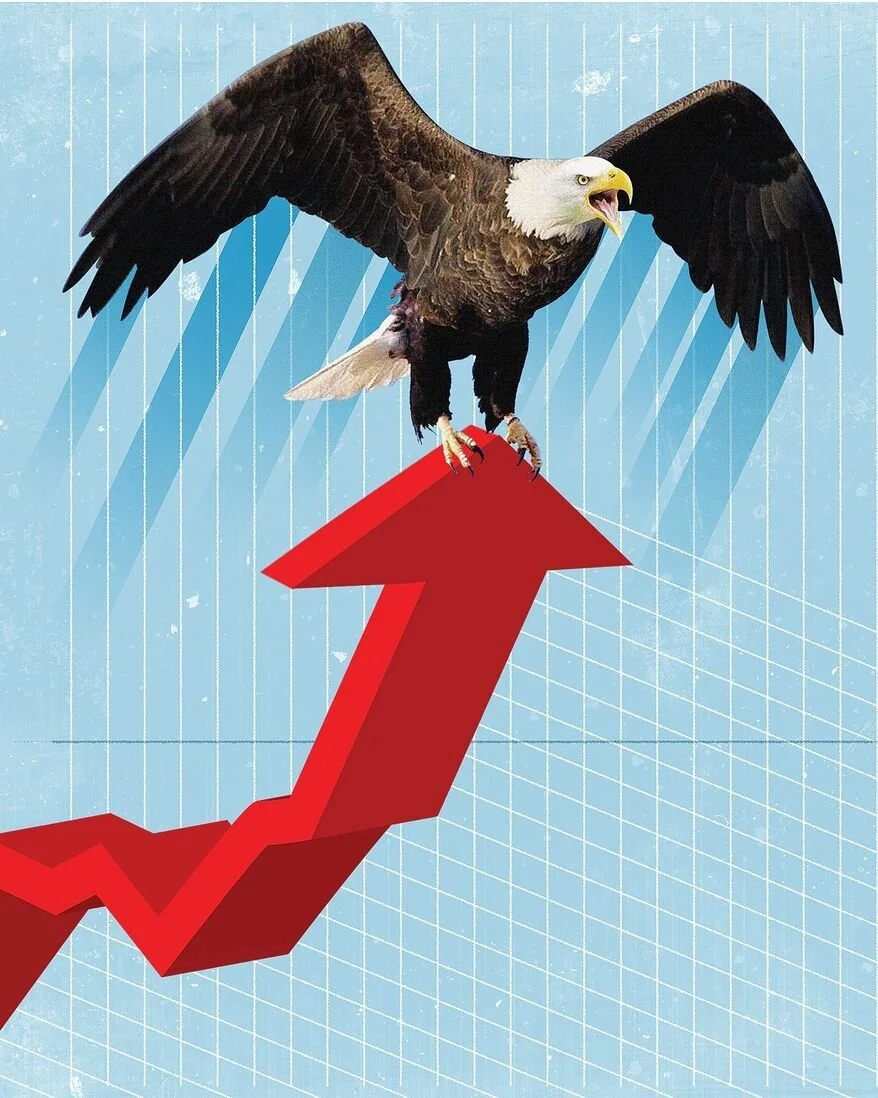
Profits Poised for Growth
COVID lockdowns crushed the economy in the first half of 2020, with real GDP down 5.0% at an annual rate in the first quarter and 31.4% at annual rate in the second quarter, the latter of which was the steepest drop in real GDP for any quarter since the Great Depression in the 1930s.
Read More
The Long Slog Recovery!
The GDPNow tracking model, created but the Atlanta Fed, is forecasting that real GDP grew at a 32% annual rate in Q3. We're waiting for data on inventories and net exports (which may pull down GDP growth) before committing to a growth rate over 25%. But, either way, it's going to be the fastest real GDP growth for any quarter since World War II and we all knew it was coming.
Read More
S&P 500 3650, Dow 32,500
At the end of 2019 we made the same exact forecast for the end of 2020 — the strangest year in our lifetimes, and it's not even over. Compared to most analysts, this was a very bullish call. And then, when the market hit a pre-COVID19 peak of 3386 in mid-February, if anything we looked not bullish enough.
Read More
Inflation, Employment & The Virus
How can the stock market rise while the economy remains down?
We can think of at least four reasons:
1) Publicly listed companies didn't get there by accident. Many provide the technology it takes for us to operate in this shutdown environment, others have the resources and clout to stay open and take market share from those forced to close.
2) States are reopening and "greens shoots" of economic growth are appearing.
3) The overall US market remains undervalued. And,
4) The money supply is exploding.
While some think this is a "sugar high" we aren't in that camp, and think investors should stay optimistic on US equities.
Read More
Don't Play GDP Politics
These days, pretty much everything is hyper-political, including death rates from disease, wearing masks, opening schools, whether some demonstrations are "mostly peaceful" or "violent," and now GDP.
Read More
Saving and the Shutdown
Turning off the global economic light-switch, and then turning it partially back on, has sent shockwaves through economic data that, while anticipated, have been jaw-dropping in both directions.
Read More
S&P 500 After COVID-19
In a word, COVID-19 has distorted the equity market. The S&P 500 may become even more mega-cap-fixated than before. Earnings uncertainty may surprise investors to the upside with P/E multiple expansion, thanks to the Fed’s zero-interest-rate policy (ZIRP). But as a word of caution, P/E investing may be quite unreliable, since we do not have any clear image of earnings going forward. But P/E will certainly be a helpful indicator once we get to the second-quarter earnings season.
Read More
More Green Shoots
But the most important piece of economic news last week was that regular continuing unemployment claims declined 3.86 million to 21.05 million, the first drop since the end of February. That's still an astronomically high number compared to historical norms: the peak in the aftermath of the 2008-09 Financial Crisis was 6.64 million.
Read More
Miscalculating Risk: Confusing Scary With Dangerous
We think the world is confusing "scary" with "dangerous." They are not the same thing. It seems many have accepted as fact that coronavirus is one of the scariest things the human race has ever dealt with. But is it the most dangerous? Or even close?
Read More
How Are We Going To Pay For All This?
The largest federal budget deficit since World War II came back in 2009, as slower growth and increased government spending during the subprime-mortgage financial panic pushed the deficit to 9.8% of GDP. This year's the budget deficit will, quite simply, blow that record out of the water.
Read More
Bringing Pharmaceutical Manufacturing Back to the United States
If President Trump and his advisers want to return the safety of US medical manufacturing to America, they can do it with the stroke of a pen (with congressional help).
Read More
Investors Don’t Buy GDP, They Buy Individual Companies
In many ways, the spread of the Coronavirus has given larger well-capitalized companies, particularly technology companies and big box stores that were allowed to stay open, an advantage over Main Street competitors. And unlike Main Street businesses, a larger share of these companies are publicly traded.
Read More
GDP: Bad, And Getting Worse
As a result, we now think real GDP contracted at a 3.7% annual rate in Q1, led by a massive drop in inventories as well as declines in consumer spending, business investment in equipment, and commercial construction. That 3.7% is not set in stone, however. We'll get some reports on inventories and international trade on Tuesday morning, and may refine our forecast then. Either way, it's going to be bad.
Read More
The Geopolitics of American Fear
Today, I’m not going to go through all the country-by-country details of the ongoing coronavirus pandemic. My team and I are working diligently – franticly – to assimilate a huge amount of ever-changing information. As soon as we have some preliminary conclusions, we will share them. But for now we just don’t have enough hard data.
Read More
Lessons from Japan?
Thirty years ago, many in the US were in fear that a rising power in Asia was on the verge of eclipsing the US. Now it's China, back then it was Japan.
Read More
Jobs, Coronavirus, and the Budget
In January, US payrolls expanded by 225,000, not only beating the consensus forecast, but also forecasts from every single economics group. Since January 2019 (12 months ago), both payrolls and civilian employment – an alternative measure of jobs that includes small-business start-ups – are up 2.1 million. The labor force – those who are either working or looking for work – is up 1.5 million, while the jobless rate fell to 3.6% from the 4.0%.
Read More